
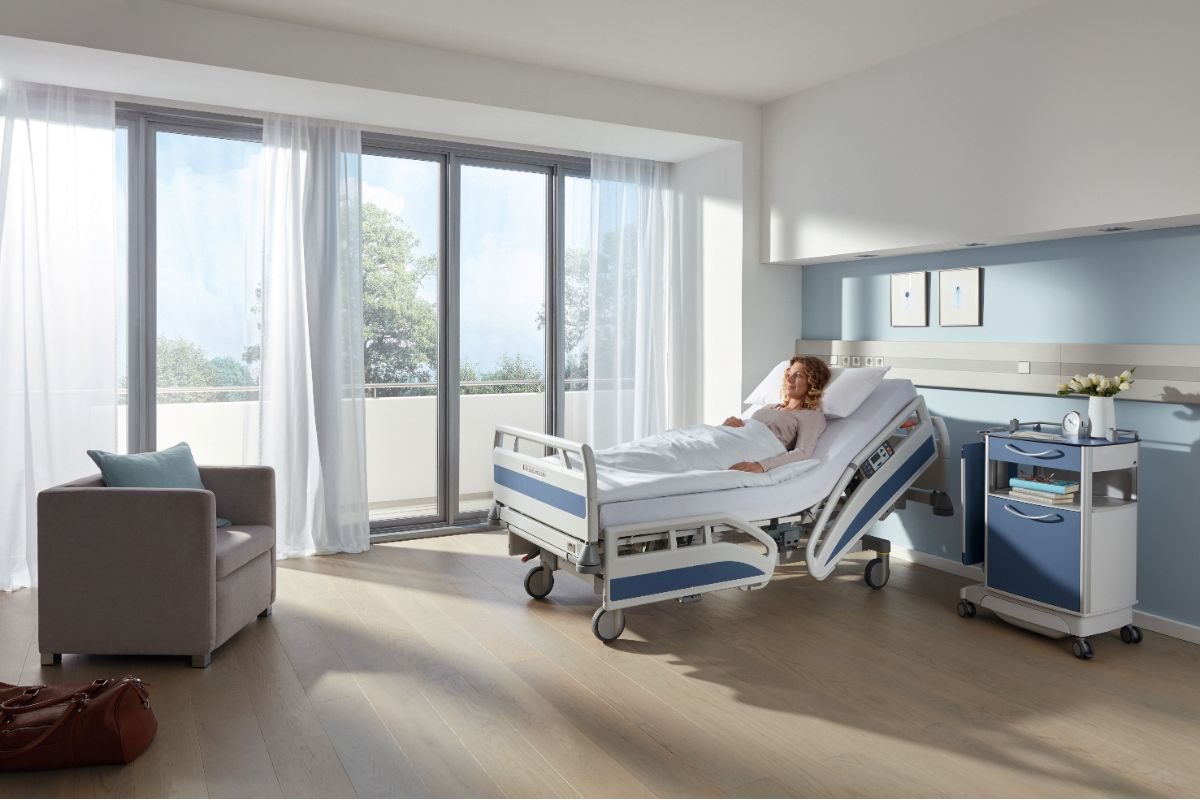
In today's healthcare environment, a hospital bed is no longer simply furniture in a patient room.
It is one of the most frequently used pieces of clinical equipment across a facility, influencing patient safety, staff wellbeing, infection prevention, mobilisation, and the overall delivery of care.
The reality is that healthcare teams spend thousands of hours interacting with a hospital bed throughout its lifecycle. From admissions and transfers to treatment, recovery, cleaning, maintenance, and discharge, the performance of the bed directly affects both patient outcomes and operational efficiency.
For this reason, selecting the right bed platform has become a strategic clinical decision rather than a purchasing exercise.
The Challenges Healthcare Facilities Face Today
Healthcare providers are navigating growing demands across multiple areas:
• Increasing patient acuity and complexity
• Ongoing workforce shortages and staff fatigue
• Pressure injury prevention targets
• Falls reduction initiatives
• Infection prevention and control requirements
• Rising maintenance and equipment replacement costs
• The need to maximise the lifespan of capital equipment
Hospital beds sit at the centre of all these challenges. The right solution can help address them. The wrong one can create additional workload, risk, and cost.
What Should Healthcare Facilities Look For?
When evaluating a hospital bed fleet, it's important to consider the entire patient and caregiver experience, not just specifications on a data sheet.
Patient Safety and Mobility
Modern hospital beds should actively support safe patient mobilisation and independence.
Features such as low height positioning, intuitive controls, ergonomic side rails, and advanced bed exit monitoring can help reduce falls risk while supporting patients to move safely and confidently.
Early mobilisation is increasingly recognised as a key contributor to improved recovery outcomes, and the bed should help facilitate that process rather than create barriers.
Pressure Injury Prevention
Pressure injuries remain one of the most significant clinical challenges across healthcare environments.
A hospital bed should work in partnership with support surfaces to promote effective pressure redistribution, patient positioning, and ease of care. Features that minimise shear and friction forces during repositioning can make a meaningful difference to patient comfort and skin integrity.
Infection Prevention and Control
Environmental cleaning has never been more important.
Healthcare facilities should look for beds designed with smooth surfaces, minimal dirt traps, enclosed components, and high ingress protection ratings. Advanced designs make cleaning faster, more effective, and more consistent, supporting infection prevention protocols and reducing equipment downtime.
Caregiver Safety
Every manual task performed around a patient bed contributes to cumulative workplace strain.
Beds with extensive height adjustment ranges, electric positioning functions, central braking systems, and exceptional manoeuvrability help reduce physical demands on staff and support safer patient handling practices.
When equipment works with clinicians, rather than against them, staff efficiency and workplace satisfaction improve.
Reliability and Lifecycle Performance
One of the most overlooked considerations when purchasing hospital beds is the total cost of ownership.
A lower acquisition price does not always translate to lower long-term costs.
Healthcare organisations should evaluate:
• Product durability
• Serviceability
• Availability of spare parts
• Manufacturer support
• Preventive maintenance requirements
• Expected operational lifespan
Reliable equipment minimises downtime, reduces replacement costs, and provides confidence that beds will perform when they are needed most.
Why Hospitals Are Looking Beyond Features
The best hospital bed is not necessarily the one with the longest list of features.
The best hospital bed is the one that consistently delivers safer patient care, supports clinical staff, withstands years of demanding use, and continues to perform when healthcare teams depend on it most.
That's why leading healthcare organisations are increasingly focusing on solutions that combine clinical functionality, durability, infection control, mobility support, and lifecycle value into a single platform.
The Stiegelmeyer Difference
German-engineered and trusted throughout healthcare environments worldwide, the Stiegelmeyer hospital bed range has been developed with a clear focus: supporting exceptional patient care while making life easier for healthcare professionals.
From advanced mobilisation features and intelligent safety functions to exceptional durability, manoeuvrability, and infection control design, every element is engineered to meet the demands of modern healthcare.
Choosing a hospital bed isn't simply about filling a room.
It's about selecting a platform that will support thousands of patient journeys, empower clinical teams, and deliver value for years to come.
The question isn't whether a hospital bed will be used every day.
It's whether the bed you choose will continue performing at the level your patients and staff deserve, every single day.