
Walk onto almost any med-surg floor and you'll see it: a patient shuffling down the corridor, gown open at the back, one hand gripping a wheeled metal pole that's fighting them at every turn. The wheels catch on the elevator threshold. The pole tips when they lean on it for support — because it was never built to be leaned on. A nurse or family member trails alongside, one hand hovering near the patient's elbow, ready for the stumble everyone can see coming.
This is early mobilization in 2026: one of the most evidence-backed interventions in inpatient care, delivered with equipment designed in an era when "mobility" meant simply not being confined to bed — not helping someone walk safely.
The clinical stakes are real. Every hospital already knows the downstream cost of immobility: deconditioning, longer stays, higher fall risk, slower functional recovery. Getting patients up and walking, early and often, is one of the few interventions where the evidence and the economics point the same direction. So why are we still asking patients to do it while holding onto a glorified coat rack on wheels?
The Standard IV Pole Was Never a Mobility Device
Traditional poles fail patients in three predictable ways:
- No structural support. A star-foot pole is designed to hold a bag steady, not to bear a patient's weight. Lean on it and it tips — which is exactly how falls happen.
- No stability at transitions. The gap between a lift and the corridor, a threshold, a slightly uneven floor — all of it becomes a hazard when your "walking aid" is a narrow-based pole.
- It's a liability disguised as equipment. Every fall involving a standard pole is a preventable incident report, an extended stay, and — quietly — a trust problem between your care team and the family in the room.
A Different Starting Premise: Technicare Mobylizer 2
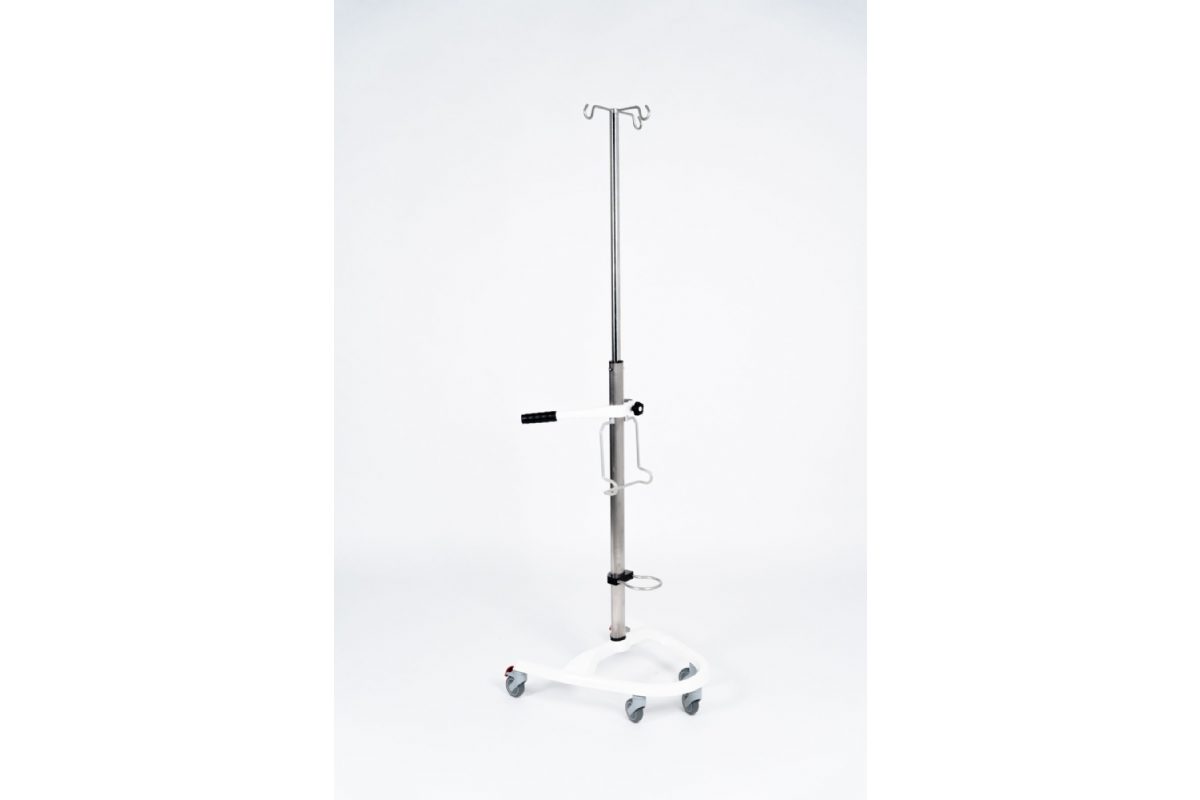
Technicare didn't set out to build a better pole. They set out to fix the actual problem: patients need something to hold onto that won't move when they need it most. The Mobylizer 2 IV Pole is what happens when an IV pole is redesigned from the ground up as a walking aid first, infusion stand second.
What that looks like in practice:
- A height-adjustable steering bar, not a bare shaft — giving patients an actual handlebar to grip and lean into, supporting a more confident, independent gait during rehab.
- A stable, oval-based foot on five castors, engineered for real hospital geography — lift-to-corridor gaps, threshold transitions, and uneven flooring — without the tipping risk of a narrow star foot.
- A removable infusion tube, cutting down the setup and changeover time nursing staff spend fighting with tubing instead of focusing on the patient.
- One design, every patient. The oval stand and adjustable handlebar mean the same unit scales from pediatric to adult use — one piece of equipment, not three SKUs cluttering your supply room.
- Built for the fleet, not just the bedside. Up to 30 units stack on a single pallet, which matters more than it sounds like when you're procuring, storing, and rotating equipment across departments like Cardiology, Orthopedics, Pulmonary, and Day Treatment.
Why This Is a Clinical Decision, Not Just a Procurement One
Every unit that still requires a staff member to physically stabilize a patient walking with an IV pole is a unit spending nursing time on equipment failure, not patient care. Replacing the pole doesn't just reduce fall risk on paper — it changes the behavior you actually see on the floor: patients walking sooner, more often, and with more confidence, because the equipment in their hands is finally doing its job.
That's the whole premise behind the Mobylizer concept: the idea was born when its founder witnessed a fall caused by exactly the equipment failure described above. It's a walking aid that happens to hold an IV bag — not the other way around.
If your fall-prevention protocol still depends on staff catching what the equipment should be preventing, it's worth asking whether the pole is part of your mobility strategy or working against it.
https://www.youtube.com/watch?v=u3XVltbVQSY